Thursday, May 31, 2012

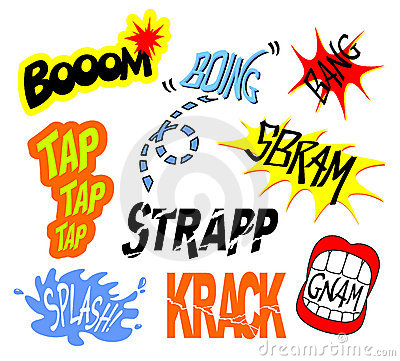
Onomatopoeia

definition: the use of imitative and naturally suggestive words for rhetorical, dramatic, or poetic effect.

example:
  • splash
  • spray
  • sprinkle
  • drip
  • drizzle

sentence: it uses natural words to give a poem a effect so that is why it is important

imagery

definition: the formation of mental images,  figures, or likenesses of things, or of such images  collectively: the dim imagery of a dream.

example:
The winter evening settles down
With smell of steaks in passageways.
Six o'clock.
The burnt-out ends of smoky days.
And now a gusty shower wraps
The grimy scraps
Of withered leaves about your feet
And newspapers from vacant lots;
The showers beat
On broken blinds and chimney-pots,
And at the corner of the street
A lonely cab-horse steams and stamps.
And then the lighting of the lamps.

sentence: it is important because it inspires feeling


Personification

definition: the attribution of a personal nature or character to inanimate objects or abstract notions, especially as a rhetorical figure.

example:Hey diddle, Diddle,

Sentence:Consider the vulgarity of objectification. Personification must be its opposite: imagining that even an ash tray is worried about second hand smoke is the very stepping beyond the present and into the fantastic and literary that poetry promises.
Authors use personification to make stories/ poems more dramatic and interesting or to convey a certain mood. Personification also helps us to relate more to the object or idea that is being personified because it is easier for us to relate to something with human attributes.
Basically, personification is an inanimate object doing something that only an organism can do. ex. The rival flower (inanimate object) slowly pulled out his gun. (flowers don't have hands or guns!)
another example would be, The flowers are dancing in the wind.


Simile

definition: a figure of speech in which two unlike things are explicitly compared, as in “she is like a rose.”

Example:  “cute as a kitten,” comparing the way someone looks to the way a
kitten looks


sentence: simile is important because we always use it and they always start with like or as
 

Friday, May 18, 2012

repetition

definition: continuously saying the same thing

example:

I'm nobody! Who are you?
Are you nobody too?
Then there's a pair of us-don't tell!
They'd banish us you know.

How dreary to be somebody!
how public, like a frog.
To tell your name livelong day
To an admiring bog!


significance:so you can understand it 

tone

definition: your emotions expressed in a way when you  read a poem

example
I'm going out to clean the pasture spring; (light, informing tone)
I'll only stop to rake the leaves away ("only" tone - reservation)
(And wait to watch the water clear, I may): (supplementary, possibility)
I sha'n't be gone long. -- You come too. (free tone, assuring) (after thought, inviting) "Rather well for me" --

I'm going out to fetch the little calf (Similar, free, persuasive, assuring
That's standing by the mother. It's so young, and inviting tones in second stanza)
It totters when she licks it with her tongue.
I sha'n't be gone long. -- You come too.


significance:the quality and the pitch in a poem

interpretation

definition; how you understand something in your own way
 
 example:

O CAPTAIN! my Captain! our fearful trip is done;
The ship has weather'd every rack, the prize we sought is won;
The port is near, the bells I hear, the people all exulting,
While follow eyes the steady keel, the vessel grim and daring:
But O heart! heart! heart!
O the bleeding drops of red,
Where on the deck my Captain lies,
Fallen cold and dead.

significance: it is important because we need to understand they way that the author put the words in a book or in an poem